
Resources
The Evaligned Reading List
Every book recommended inside the Evaligned programme — organised by the six dimensions. Each one earns its place because it changes how you think, not just how you feel.
Purpose & Direction
Books that help you cut through the noise, clarify what matters, and design a life that is genuinely yours.
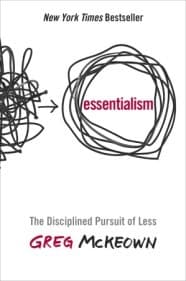
Essentialism
Greg McKeown
The disciplined pursuit of less. McKeown makes the case — with research and rigour — that doing fewer things better is not a sacrifice, it is the point. Essential reading for anyone who feels perpetually busy but quietly directionless.
"If you don't prioritise your life, someone else will."View on Amazon →
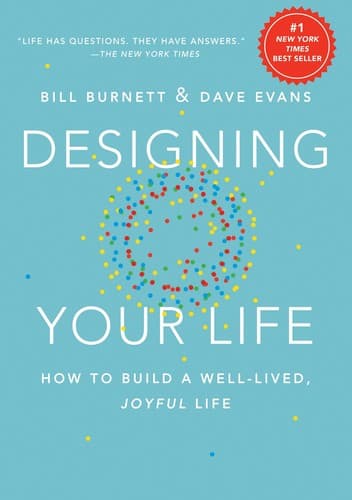
Designing Your Life
Bill Burnett & Dave Evans
Stanford design professors apply product-thinking to the question of how to live. Practical, grounded, and unusually helpful for anyone facing a crossroads or feeling stuck in a life that no longer fits.
View on Amazon →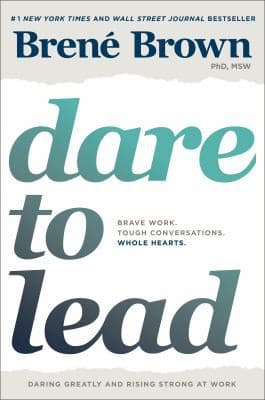
Dare to Lead
Brené Brown
Leadership is not a job title — it is anyone who takes responsibility for finding potential in others. Brown's research on values, vulnerability, and courage is foundational to the Purpose dimension of the Evaligned framework.
"Clarity on values is not a soft skill. It is the skill."View on Amazon →
Mental Clarity
Books for quieting the mental noise, reclaiming your attention, and understanding what is actually happening in your mind.
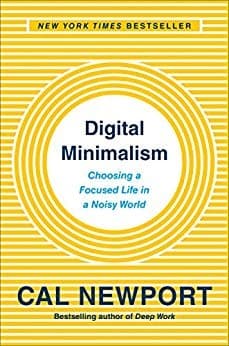
Digital Minimalism
Cal Newport
A rigorous and practical case for using technology with intention rather than compulsion. Newport gives you a philosophy and a process — not just another app detox plan. Referenced directly in the Clarity pathway practices.
"The key to thriving in our high-tech world is to spend much less time using technology."View on Amazon →
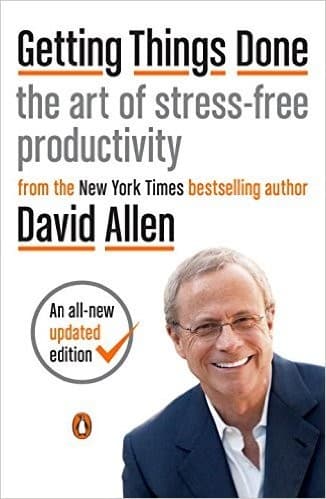
Getting Things Done
David Allen
The most reliable system for clearing your mental RAM. Allen's GTD method turns the chronic anxiety of open loops into a trusted external system — freeing your mind to actually think rather than just track.
View on Amazon →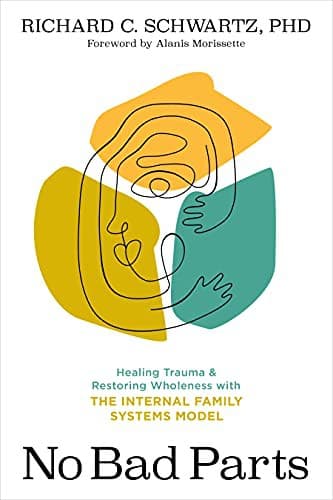
No Bad Parts
Richard C. Schwartz
Internal Family Systems (IFS) in accessible form. Schwartz makes the case that the inner critics, anxious voices, and self-sabotaging patterns are not problems to be eliminated — they are parts to be understood. A genuinely different way to relate to your own mind.
"Every part of you has a positive intent — even the ones you hate."View on Amazon →
Emotional Balance
Books that build emotional intelligence, self-compassion, and the capacity to feel without being controlled by feeling.
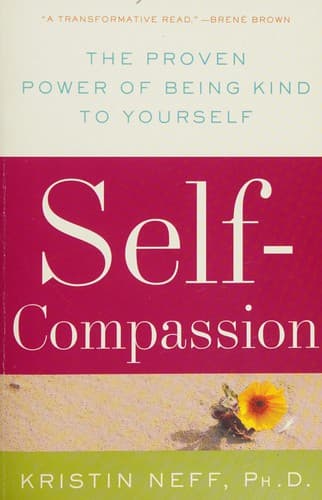
Self-Compassion
Kristin Neff
The research that changed how we think about inner criticism. Neff shows that self-compassion is not self-indulgence — it is actually the foundation of resilience, motivation, and genuine wellbeing. One of the most practically useful books in this entire list.
"With self-compassion, we give ourselves the same kindness and care we'd give to a good friend."View on Amazon →
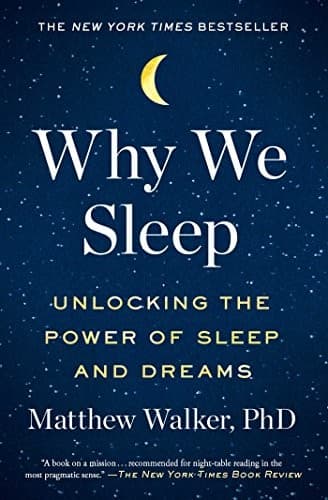
Why We Sleep
Matthew Walker
Emotional regulation, decision-making, memory, and mood are all downstream of sleep. Walker's research is both alarming and clarifying — once you understand what sleep actually does, prioritising it becomes non-negotiable. Foundational to the Energy dimension but included here because of its profound effect on emotional stability.
"Sleep is the single most effective thing we can do to reset our brain and body health each day."View on Amazon →
It's OK That You're Not OK
Megan Devine
The counter-cultural grief book. Devine — a therapist who lost her partner in a sudden drowning — dismantles the idea that grief is a problem to be fixed and replaces it with radical validation. This is the book that gives grieving people permission to not be fine, and gives everyone else a better way to show up for them.
"Some things in life cannot be fixed. They can only be carried."View on Amazon →
The Year of Magical Thinking
Joan Didion
The definitive memoir of grief and its disorientation. Didion writes about the year following her husband's sudden death with the precision of a journalist and the rawness of someone in freefall. It captures what grief actually feels like from inside — the magical thinking, the inability to give away shoes, the way the mind keeps circling back. A book that makes grieving people feel less alone.
"Grief turns out to be a place none of us know until we reach it."View on Amazon →
The Disease to Please
Harriet Braiker
The definitive book on the psychology of people-pleasing. Braiker identifies the approval-seeking cycle, the guilt that enforces it, and the toll it takes on emotional health. If you recognise yourself as someone who cannot stop accommodating others — even at your own expense — this book will show you exactly why, and how to break the pattern.
"People-pleasing is not about being nice. It is about being afraid."View on Amazon →
Relationships & Support
Books for communicating honestly, setting boundaries with care, and building the connections that actually sustain you.
Nonviolent Communication
Marshall B. Rosenberg
A communication framework that has been used in peace negotiations, schools, and families for decades. Rosenberg teaches you to hear what people actually need beneath what they say — and to express your own needs without blame. Transformative for anyone whose relationships feel like hard work.
"All violence is the result of people tricking themselves into believing that their pain derives from other people."View on Amazon →
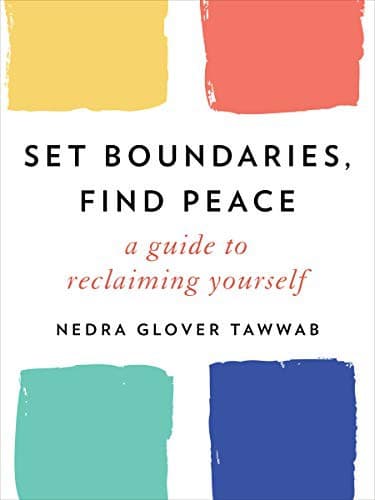
Set Boundaries, Find Peace
Nedra Glasser Tawwab
The clearest, most practical guide to boundaries available. Tawwab is a therapist who has spent years working with people who people-please, over-give, and feel chronically drained. This book is the antidote — warm, direct, and full of real-world scripts.
"Healthy relationships require healthy boundaries."View on Amazon →

Not Nice
Aziz Gazipura
A direct, unflinching guide to breaking free from the 'nice person' identity. Gazipura — a clinical psychologist — argues that chronic niceness is not a virtue but a cage, and that the confidence to be honest, set limits, and tolerate disapproval is the foundation of genuine self-worth. Essential reading for anyone who has confused being liked with being respected.
"Being nice is not the same as being good. It is the same as being afraid."View on Amazon →
Inner Life & Meaning
Books for the questions that sit beneath the surface — meaning, mortality, faith, mystery, and the quiet inner life that sustains everything else.
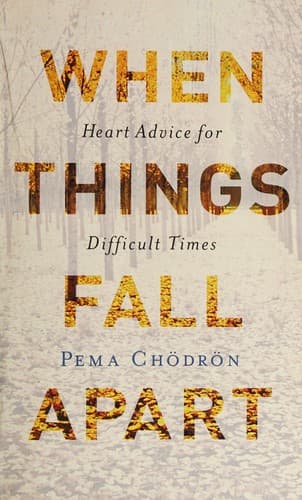
When Things Fall Apart
Pema Chödrön
Buddhist wisdom for sitting with loss, uncertainty, and the groundlessness that grief brings. Chödrön does not offer comfort in the conventional sense — she offers something harder and more useful: the practice of staying present with pain rather than running from it. A profoundly honest book for anyone whose world has been rearranged.
"To be fully alive, fully human, and completely awake is to be continually thrown out of the nest."View on Amazon →
Energy & Health
Sleep, movement, nutrition, and recovery — the physical foundation everything else depends on. Books grounded in science that help you restore, sustain, and optimise your body.
Why We Sleep
Matthew Walker
Every system in the body is governed by the quality of your sleep. Walker's landmark book covers the science in accessible detail — and makes the case that sleep is not a passive state but the most powerful health intervention available to you. Referenced in the Energy pathway practices.
"Sleep is the single most effective thing we can do to reset our brain and body health each day."View on Amazon →
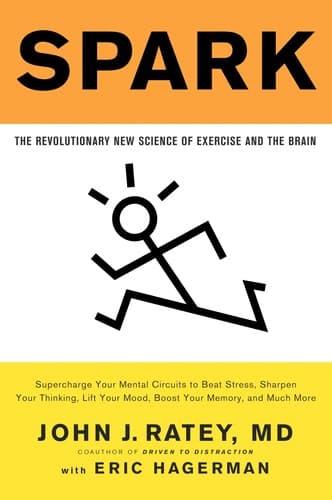
Spark
John J. Ratey
The definitive book on how exercise transforms the brain — not just the body. Ratey, a Harvard psychiatrist, shows how movement is the single most powerful tool for improving mood, focus, anxiety, and learning. The research behind why 22 minutes of daily movement changes everything.
"Exercise is the single best thing you can do for your brain."View on Amazon →

Brain Changer
Felice Jacka
The pioneering nutritional psychiatrist behind the SMILES trial — the first randomised controlled trial to show that dietary improvement can treat clinical depression. Jacka makes the case that what you eat directly shapes your mood, cognition, and mental health. Foundational to understanding the gut-brain axis.
View on Amazon →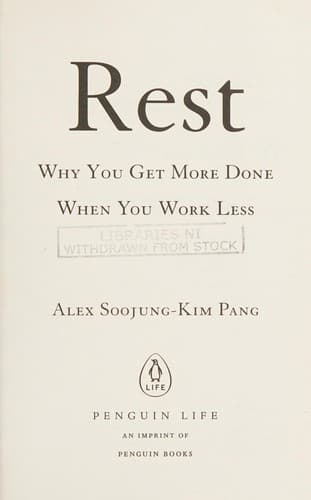
Rest
Alex Soojung-Kim Pang
The science of why rest is not the opposite of productivity — it is the foundation of it. Pang draws on research and the habits of history's most prolific creators to show that deliberate rest is a skill, not a luxury. Essential for anyone in burnout recovery.
View on Amazon →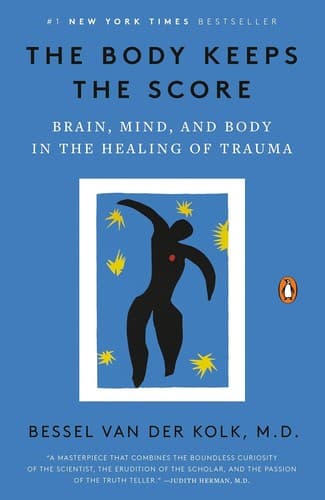
The Body Keeps the Score
Bessel van der Kolk
The landmark work on how stress, trauma, and chronic emotional load become stored in the body. Van der Kolk — one of the world's leading trauma researchers — shows why body-based interventions (movement, yoga, breathwork) are often more effective than cognitive approaches alone.
"The body keeps the score. If the memory of trauma is encoded in the viscera, then you need to access it through the body."View on Amazon →
Beyond books
Trusted resources for the physical foundation
Evaligned is not a fitness programme — but the body is the foundation everything else depends on. These are the external resources we trust for sleep, movement, nutrition, and recovery.
Sleep
Movement
Nutrition
Recovery & Nervous System
Ready to put the reading into practice?
The Evaligned assessment identifies which dimension to start with — then builds a personalised pathway around it.